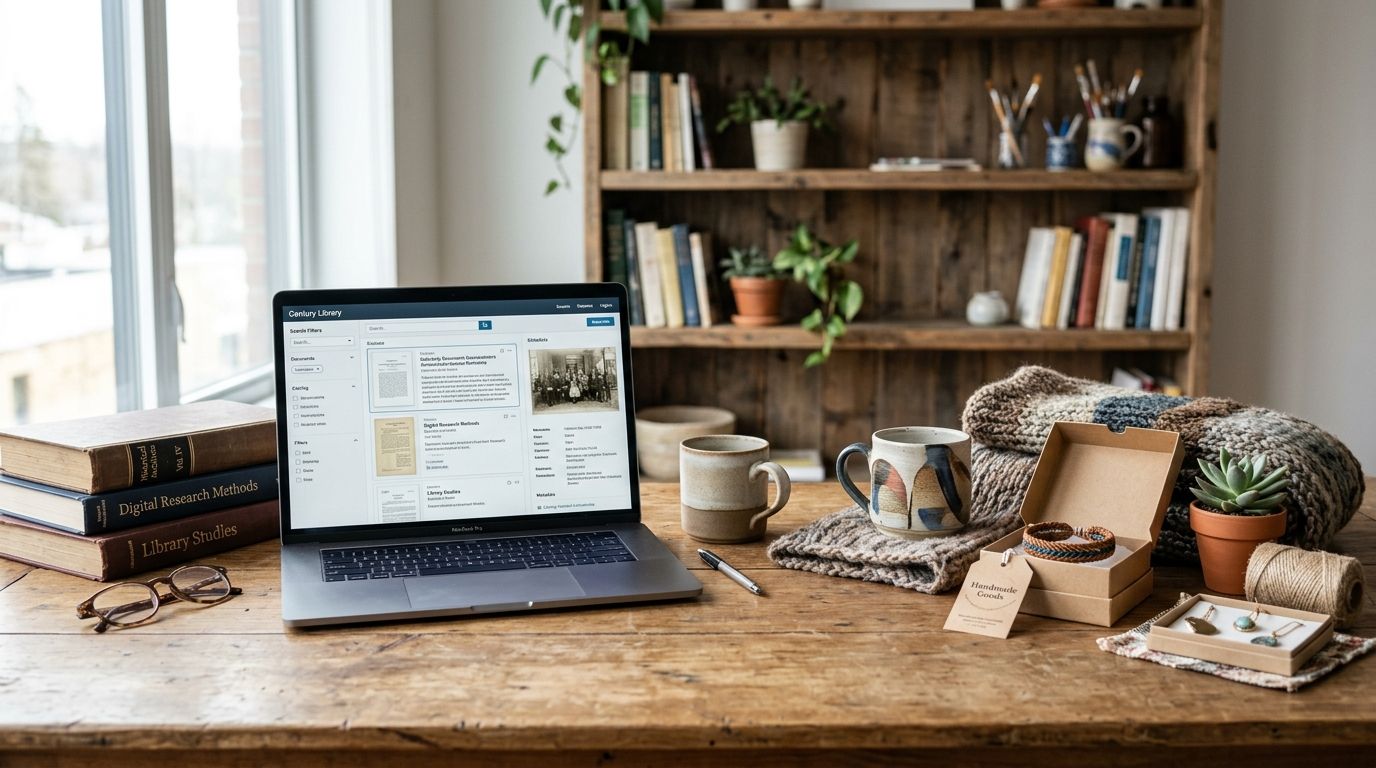
Choose Century Library if you're building a brand, a wedding suite, packaging, or stationery line that needs restored antique illustrations and typefaces with clean commercial terms. Choose Alamy if you need contemporary photography, editorial news imagery, or a massive general stock library where vintage material is a small subset, not the point.
The two aren't really chasing the same customer. Century Library is a curated archive built around one thing — hand-restored 19th and early 20th century illustration, ornament, and type. Alamy is a broad-spectrum stock agency with tens of millions of images across every category, vintage included but buried among everything else.
- Century Library vs Alamy in 2026 comes down to depth vs breadth: restored antique assets vs general stock volume.
- Century Library wins for branding, stationery, and craft projects needing authentic vintage sourcing.
- Alamy wins for editorial photography, news imagery, and sheer catalogue size across all subjects.
- Both require checking license terms before reselling assets in physical products.
- Century Library excludes AI-generated imagery from its core archive of 50,000+ restored assets.
Why this matters
Designers searching "vintage illustrations" on a general stock site scroll past thousands of unrelated results — modern photography, icon packs, AI-generated filler — before finding usable antique material. That search friction costs time on every project, and it compounds when you're licensing per image instead of per subscription.
The decision isn't cosmetic in 2026. It affects how fast you find a usable plate, what you're legally allowed to do with it, and whether the sourcing story holds up when a client asks where an illustration came from.
At a glance
| Dimension | Century Library | Alamy |
|---|---|---|
| Best for | Branding, stationery, packaging, wedding invitations | Editorial photography, news, broad commercial stock |
| Content type | Restored vintage illustration, antique fonts, patterns, ephemera | General stock photography, illustration, vectors |
| Archive focus | Curated depth — 50,000+ restored assets | Millions of images across all categories |
| Licensing model | Subscription access | Per-image licensing and subscription tiers |
| AI-generated content | Excluded from the archive | Not excluded across the broader marketplace |
| Search experience | Narrow, catalogue-style browsing | Keyword search across a general index |
| Standout feature | Hand-restored antique plates and fonts | Volume and editorial/news coverage |
| Commercial reuse terms | Defined per subscription tier | Defined per license type purchased |
Century Library offers more sourcing transparency for antique material
Every asset in the Century Library archive is restored from an actual historical source — a 19th-century trade catalogue, a Victorian pattern book, a period type specimen. The positioning rests on hand-restored and authentic rather than generic stock language, and the archive excludes AI-generated imagery.
Alamy's catalogue is enormous, but vintage-styled content sits alongside modern photography and illustration across a general marketplace. If the sourcing story matters to your client — a heritage brand, a museum shop, a stationery line built on real antique provenance — that distinction shows up in the finished product.
Verdict: Century Library is the better fit in 2026 when authenticity of source material is part of the pitch.
Alamy is the better tool for volume and editorial coverage (by a lot)
Alamy's core strength is scale. It covers news events, travel, wildlife, and documentary imagery at a volume no curated archive of 50,000+ vintage assets can match, because a curated archive isn't built to do that.
If a project needs a specific 2026 news photo, a location shot, or contemporary editorial coverage, Century Library doesn't compete in that lane — it was never built to.
Verdict: Alamy wins decisively on raw catalogue size and editorial photography.
Both require you to read the license terms before reuse in physical products
Neither platform lets you assume unlimited reuse rights out of the box. Stationery brands, packaging designers, and print-on-demand sellers need to check whether a subscription or per-image license covers resale in a physical product, merchandise, or a limited print run — and that check applies equally on both sites.
This is one place where neither vendor gets an automatic pass. Read the terms tied to your specific plan before you print, package, or resell.
Verdict: tie — both demand the same diligence on commercial reuse.
Century Library is the faster search experience for niche antique styles
Searching blackletter, coronet illustration, or Victorian border on a general stock site returns a mixed bag of modern interpretations, stock icons, and occasional AI output alongside genuine antique material. On a narrow, catalogue-style archive, the same search returns restored plates and nothing else.
That narrowness is a feature for anyone doing repeat work in one antique style — wedding stationery designers reusing monogram fonts, packaging teams standardizing on a single botanical set, brand builders holding one visual era across a full identity system. The license terms comparison across vintage subscriptions is the next thing to read if that describes your workflow.
Verdict: Century Library is the cleaner search experience for antique-specific work.
Alamy is the stronger option for contemporary and documentary photography
For anything outside the vintage lane — product photography reference, contemporary lifestyle imagery, current event coverage — Alamy's breadth is the reason to use it. This isn't a category Century Library serves, and that's scope, not weakness.
Verdict: Alamy wins for non-vintage, general-purpose stock needs in 2026.
Pricing: predictability vs pay-per-asset flexibility
Century Library runs on subscription access to the full archive — one recurring cost, unlimited browsing within the plan, predictable budgeting for teams doing repeat vintage work across a year. Terms vary by tier, so check the current plan details on the site before committing.
Alamy mixes subscription tiers with per-image licensing. That gives flexibility for one-off projects but gets expensive when you're pulling dozens of assets across a campaign. Neither model is objectively cheaper — it depends on how often you license and whether your work concentrates in one category or spreads across many.
If you license constantly within one style, subscription access wins on cost predictability. If you need occasional assets across unrelated categories, per-image flexibility wins.
Final verdict
Choose Century Library if you're a stationery brand, wedding designer, packaging studio, or brand builder who needs restored antique illustration and type with a defined sourcing story — someone building a visual identity around a specific historical era rather than sourcing one-off images.
Choose Alamy if you're a publisher, agency, or marketing team that needs broad editorial and contemporary photography, with vintage material an occasional rather than central need. If you're still shortlisting in 2026, the roundup of Alamy alternatives covers where else to look.
Browse the restored archive
Search 50,000+ hand-restored illustrations, fonts, patterns and ephemera.
Scorecard recap
| Dimension | Winner |
|---|---|
| Sourcing transparency | Century Library |
| Archive size and volume | Alamy |
| Commercial reuse diligence | Tie |
| Search efficiency for antique styles | Century Library |
| Contemporary and editorial photography | Alamy |
| Pricing predictability for repeat vintage work | Century Library |
FAQ
Is Century Library better than Alamy for vintage illustration?
Yes, for restored antique illustration specifically. Century Library's 50,000+ asset archive is curated around vintage material, while Alamy's vintage content sits inside a much larger general stock catalogue.
Does Alamy have vintage or antique images?
Alamy includes vintage-styled and historical imagery within its broader catalogue. It is not the site's core focus the way it is for Century Library.
Which is cheaper in 2026, Century Library or Alamy?
Century Library runs on subscription access with a predictable recurring cost. Alamy mixes subscription tiers with per-image licensing, which costs more for high-volume use in a single category.
Can I use Century Library assets in commercial branding?
Century Library is built for commercial projects including branding, packaging and stationery. Reuse terms vary by subscription tier, so check current terms before reselling in physical products.
Does Century Library use AI-generated imagery?
No. The archive is built on hand-restored historical sourcing and excludes AI-generated imagery.
Is Alamy good for editorial and news photography?
Yes. Alamy's scale and editorial coverage make it a stronger fit for news, documentary and contemporary photography than any curated vintage archive.
Which platform has a bigger archive?
Alamy has a far larger overall catalogue across all categories. Century Library is smaller by design at 50,000+ assets, focused on restored vintage illustration, fonts and ephemera.
What's the main difference between Century Library and Alamy?
Century Library is a curated archive of restored vintage illustration and antique type. Alamy is a general stock agency where vintage content is one category among many.
One last thing
The cheapest asset isn't always the fastest one. A designer chasing a specific antique border style on a general stock site can burn 20 minutes scrolling past unrelated results before finding one usable plate; on a narrow archive, that search takes seconds because the noise doesn't exist. Search time is a real cost in 2026, even when it never shows up on an invoice.