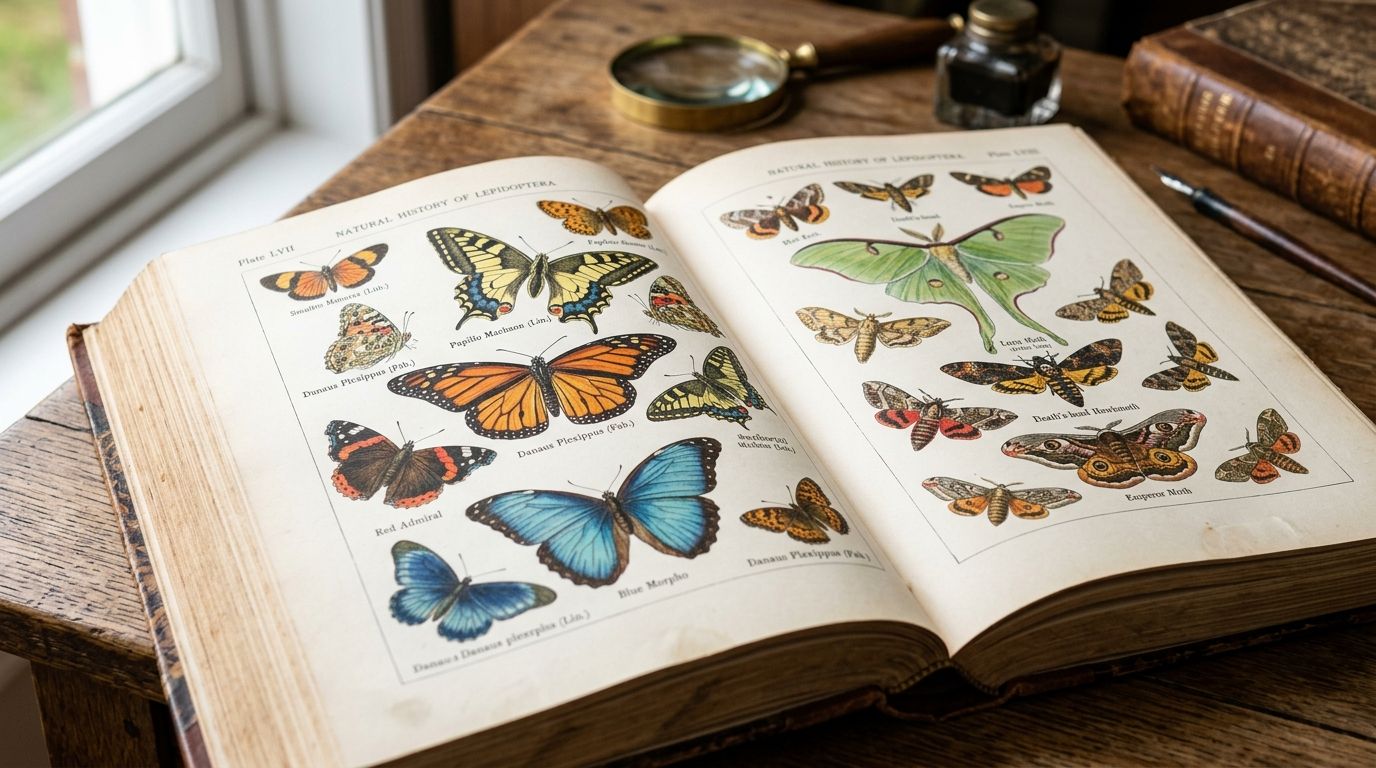
Vintage butterfly and moth illustrations sit at the intersection of natural history and decorative art, and 2026 is seeing them show up everywhere from wedding stationery to packaging for candle and tea brands. This guide ranks the best sources for those illustrations and tells you which one fits which kind of project.
- Century Library wins for commercial branding work: hand-restored vintage butterfly illustrations with zero AI-generated fills.
- Biodiversity Heritage Library is the strongest free option for naturalist scientific plates, but licensing needs manual checking.
- NYPL Digital Collections gives you high-resolution public domain scans across many eras of moth and butterfly art.
- The Met's Open Access program suits museum-grade decorative motifs more than scientific accuracy.
- Rawpixel works for fast, low-stakes vintage-style assets when a deadline matters more than archival sourcing.
Why this matters
Designers searching for vintage butterfly illustrations in 2026 are running into two problems at once: stock libraries flooded with AI-generated "vintage-style" fills, and public domain archives that are genuinely old but weren't restored for commercial print use. Neither problem is going away this year.
The difference matters most in three places: packaging that needs to print cleanly at high resolution, branding that needs a defensible commercial license, and any project where a client asks "is this actually a real 19th-century plate?" A hand-restored vintage butterfly illustration answers that question. A generative-fill approximation does not. Century Library's subscription archive is built specifically around that distinction, restoring illustrations from real historical sources rather than generating new ones.
What makes the best vintage butterfly illustrations for design
- Restoration quality — hand-restored from an original plate versus AI-upscaled or generative fill
- Commercial license clarity — can you put it on a product, a logo, or packaging without a lawyer
- Species and style breadth — naturalist engravings, decorative Art Nouveau motifs, and scientific diagrams all read differently on a page
- File format and resolution options — high-res raster for print, layered files for isolating individual specimens
- Curation and searchability — tagged by species, era, or plate style instead of buried in a generic "insects" folder
- Sourcing transparency — real archival origin stated plainly, not just implied by a sepia filter
Vintage butterfly and moth illustration sources at a glance
| Source | Best for | Standout feature | Key limitation |
|---|---|---|---|
| Century Library | Commercial branding and product use | Hand-restored, zero AI-generated imagery | New additions arrive in curated batches, not daily |
| Biodiversity Heritage Library | Free naturalist scientific plates | Massive archive of original 19th-century natural history texts | Licensing status has to be checked per scanned volume |
| NYPL Digital Collections | High-resolution public domain scans | Broad span of eras and printing styles | Search by species is inconsistent across collections |
| The Met Open Access | Museum-grade decorative motifs | Decorative arts context, not just scientific plates | Fewer straight entomological illustrations than expected |
| Rawpixel | Fast vintage-style stock assets | Large searchable catalogue, quick turnaround | Mixed sourcing quality, some AI-touched assets |
1. Century Library: best vintage butterfly illustrations for commercial branding
Century Library gives subscribers access to a curated archive of more than 50,000 restored vintage illustrations, patterns, and ephemera, with butterfly and moth plates drawn from real historical sources rather than generated fills. Every piece is restored by hand from an original plate, which matters when a client asks where an illustration actually came from.
Century Library pros:
- Hand-restored illustrations with no AI-generated imagery in the archive
- Commercial license built for branding, packaging, and stationery use
- Broader archive context means a butterfly plate can be paired with matching botanical or ephemera assets in the same project
Century Library cons:
- Illustrations are restored plate by plate, so new additions to the moth and butterfly categories arrive in batches rather than a daily upload feed
- Subscription access is required to download at commercial resolution
- Browsing strictly by species takes some filtering since the archive spans many categories beyond insects
Best for: designers building a brand identity, packaging line, or wedding stationery suite who need a defensible "this is a real restored illustration" answer.
Verdict: Subscribe. This is the source to start with for any paid client project involving vintage butterfly illustrations in 2026.
2. Biodiversity Heritage Library: best for free naturalist scientific plates
The Biodiversity Heritage Library digitizes original 19th-century natural history publications, including the entomological volumes where most classic butterfly and moth engravings first appeared. It's a genuine archive, not a stock site dressed up to look like one.
Biodiversity Heritage Library pros:
- Access to original scanned volumes at no cost
- Enormous depth for scientific and naturalist-style illustration
- Real historical provenance, since these are actual 19th-century publications
Biodiversity Heritage Library cons:
- No restoration work is done for you, so scans often need cleanup before print use
- Licensing status varies by volume and has to be checked individually
- Not organized for design use, so finding a specific species takes patience
Best for: designers with time to restore assets themselves or projects where scientific accuracy matters more than polish.
Verdict: Free supplement. Use it alongside a restored archive, not instead of one, for anything client-facing.
3. NYPL Digital Collections: best for high-resolution public domain scans
The New York Public Library's digital collections span decades of printed material, including natural history illustration from multiple eras and printing techniques. Resolution on many scans is high enough for print work.
NYPL Digital Collections pros:
- High-resolution scans suitable for large-format print
- Wide span of printing eras and illustration styles
- No restoration guesswork about whether an image is genuinely old
NYPL Digital Collections cons:
- Search by species or subject is inconsistent across different collections
- Many scans still show foxing, tears, or fold lines from the original print
- No curated "moth and butterfly" category to browse directly
Best for: designers who want raw, high-res source material and don't mind doing their own cleanup pass.
Verdict: Occasional use. Strong for reference and mood boards, weaker for a finished commercial asset straight out of the download.
4. The Met Open Access: best for museum-grade decorative motifs
The Metropolitan Museum of Art's open access program releases high-resolution images of public domain works in its collection, including decorative arts pieces where butterfly and moth motifs appear on textiles, ceramics, and prints.
Met Open Access pros:
- Museum-quality photography and scanning
- Decorative arts context adds motifs you won't find in scientific archives
- No cost to access or download
Met Open Access cons:
- Fewer straight entomological illustrations than a natural history archive offers
- Motifs are often embedded in a larger object, needing extraction work
- Not searchable specifically by insect subject
Best for: designers looking for decorative, stylized butterfly and moth motifs rather than scientific plate accuracy.
Verdict: Occasional use. A good supplement for decorative pattern work, not a primary source for illustration-heavy projects.
5. Rawpixel: best for fast vintage-style stock on a deadline
Rawpixel runs a large searchable catalogue that includes vintage-style butterfly and moth imagery alongside modern stock. It's built for speed rather than archival depth.
Rawpixel pros:
- Large, easily searchable catalogue
- Fast turnaround for low-stakes or internal-use projects
- Consistent file formats across the site
Rawpixel cons:
- Sourcing quality varies, and some assets are AI-touched rather than restored from an original
- Harder to verify true historical provenance on any given image
- Less suited to projects where a client asks about authenticity
Best for: quick internal decks, social content, or drafts where sourcing transparency isn't a client requirement.
Verdict: Skip for anything commercial and client-facing. Fine for speed, not for a project that needs to hold up to scrutiny.
How this ranking works
Each source was weighed against the six criteria above: restoration quality, license clarity, species and style breadth, file options, curation, and sourcing transparency. Century Library ranks first because it's the only entry that satisfies all six without requiring the designer to do restoration or licensing detective work. The public domain archives rank next because the material is genuine, even when the labor to make it print-ready lands on the designer.
“If an illustration says commercial license only after you contact support, treat it as a maybe, not a yes.”
Which vintage butterfly illustration source should you choose?
For a branding project, a packaging line, or wedding stationery going to print in 2026, Century Library is the default choice — restored, licensed for commercial use, and paired with a broader archive of matching illustration styles. For research, mood boards, or a project with time to spare, the Biodiversity Heritage Library and NYPL Digital Collections are worth the extra cleanup work. Save Rawpixel for drafts that never touch a paying client.
Browse the restored illustration archive
Hand-restored vintage plates, no AI-generated fills, ready for commercial use.
Designers pairing insect illustrations with other natural history categories often reach for the vintage animal illustrations for branding collection next, since moths and butterflies rarely sit alone in a finished layout.
FAQ
What's the best source for vintage butterfly illustrations in 2026?
Century Library is the strongest overall pick in 2026 for commercial work, offering hand-restored butterfly and moth plates with a clear commercial license. Free public domain archives like the Biodiversity Heritage Library are strong alternatives when you have time to restore and check licensing yourself.
Are vintage moth illustrations different from butterfly illustrations for design work?
Historically, moth illustrations lean toward scientific diagram styles while butterfly illustrations show up more often in decorative and naturalist plate form. Both come from the same 19th-century entomological publishing tradition, so a well-curated archive carries both side by side.
Can I use vintage butterfly illustrations commercially?
It depends entirely on the source. A subscription archive like Century Library states its commercial license directly, while public domain archives like NYPL Digital Collections require you to check the specific volume's rights status before using it on a paid product.
Is Biodiversity Heritage Library free to use for design projects?
Yes, the scans are free to access, but licensing status still needs to be checked per digitized volume before commercial use. The images also arrive unrestored, so cleanup work falls on the designer.
How do I tell if a vintage illustration is actually AI-generated?
Look for inconsistent line weight, repeated texture patterns, or anatomically odd wing structures that a hand engraver wouldn't produce. Archives that state their restoration process plainly, plate by plate, are more trustworthy than sites using vague vintage-style language.
What file formats do I need for packaging or stationery design?
High-resolution raster files handle most print packaging and stationery work, while layered files let you isolate a single specimen from a full plate. Confirm resolution and format options before committing an illustration to a print run.
Are museum open-access images free to use in a paid product?
Programs like the Met's Open Access release public domain images at no cost, but decorative motifs are often embedded in a larger object and need extraction work first. Check the specific object's rights status before using it commercially.
How much does a vintage illustration subscription cost in 2026?
Pricing varies by provider and plan, so check the current subscription details directly on the site before committing. Compare what's included, download resolution, and license terms rather than price alone.
One last thing
The fastest way to spot a real 19th-century butterfly plate versus a modern approximation is the wing vein detail: hand-engraved plates show slightly irregular, hand-drawn vein patterns, while generative fills tend to repeat the same vein structure across multiple wings. Check that detail before a client does.