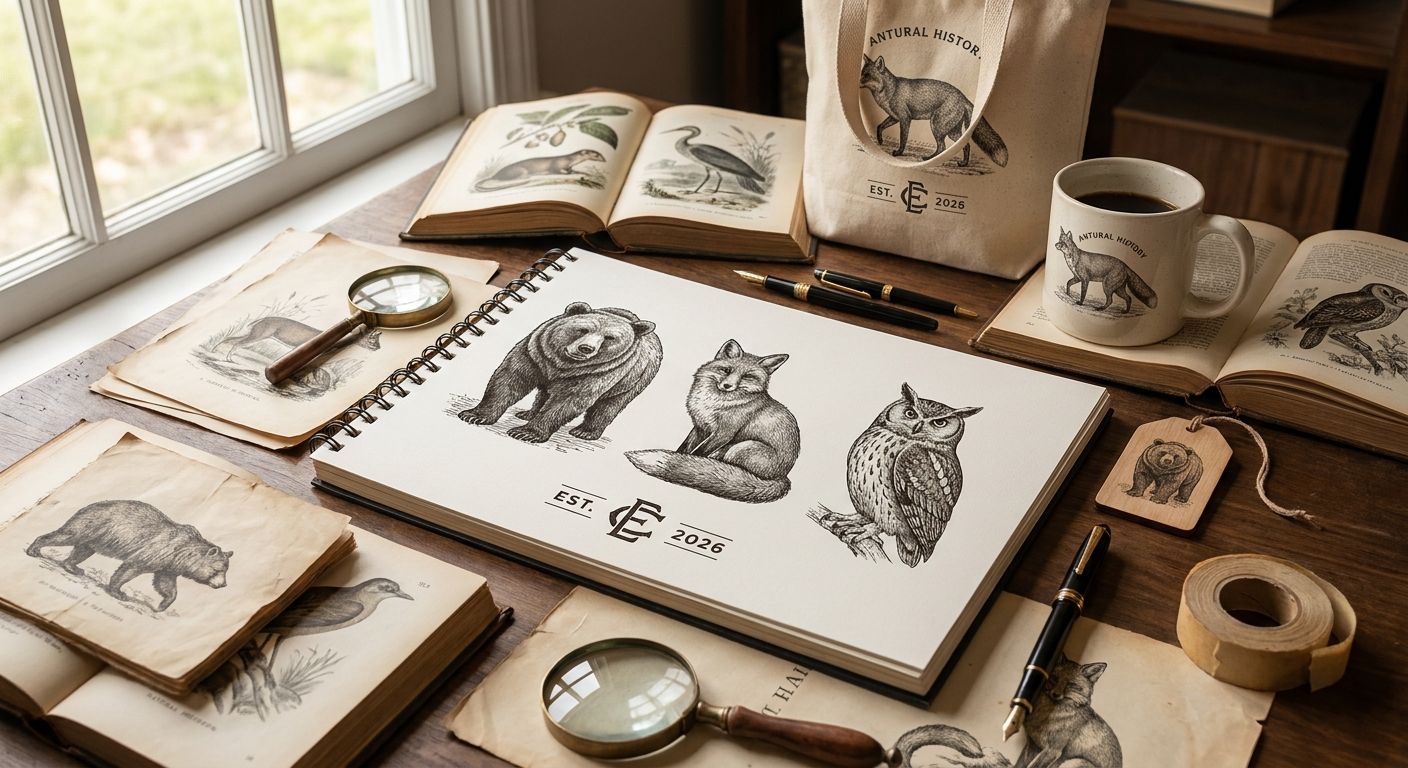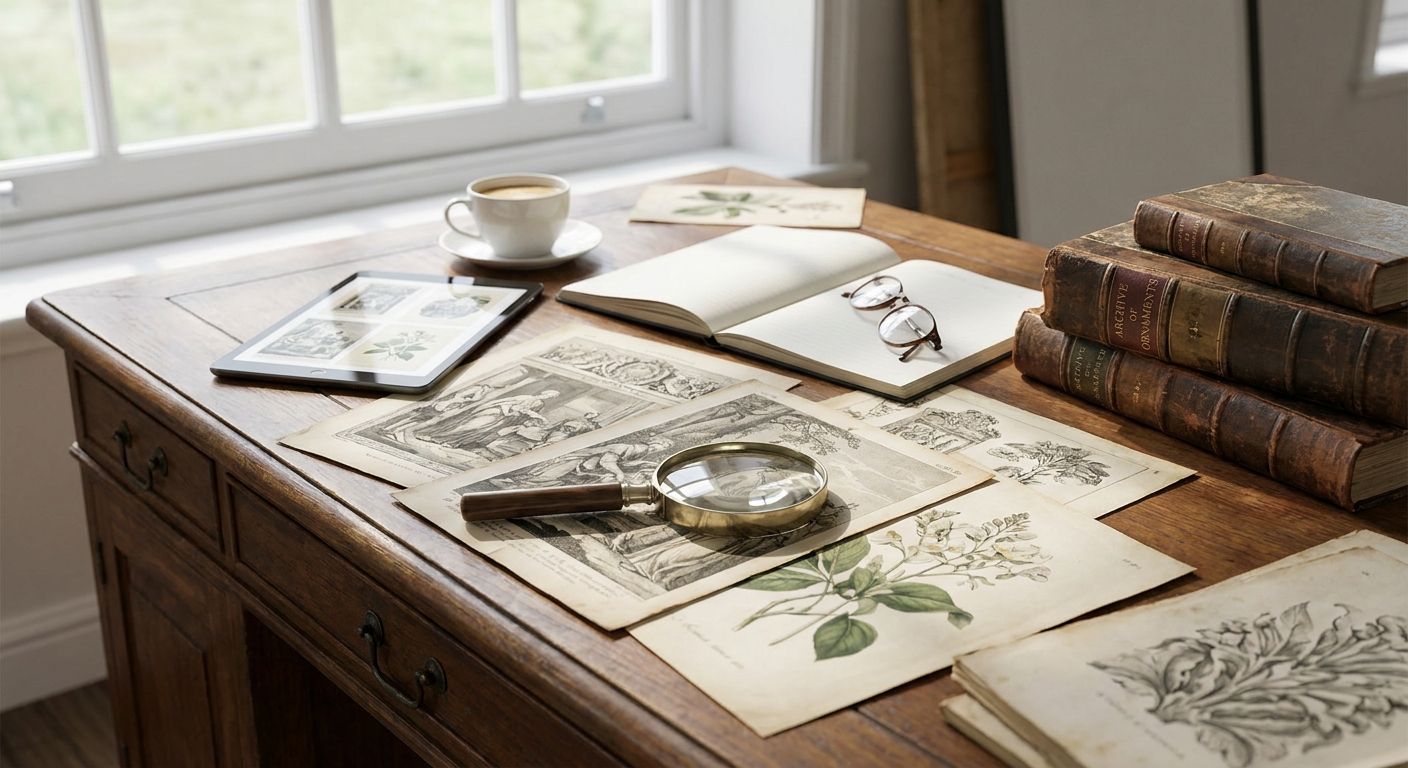
Historical clip art ranges from free, unrestored public-domain scans to hand-restored, license-cleared plates built for commercial work — and picking the wrong source costs you either money or usage rights. This guide ranks six collections by restoration quality, licensing clarity, and how ready each is for real design work in 2026.
- Century Library wins overall for historical clip art with 50,000+ hand-restored plates and zero AI-generated imagery.
- NYPL Digital Collections is the free option, but raw scans need manual cleanup before commercial use.
- Smithsonian Open Access gives you CC0 historical clip art for natural history and scientific illustration.
- Rawpixel suits teams that want a stock-photo-style workflow instead of archive browsing.
Why this matters
Most "vintage clip art" searches in 2026 turn up two bad options: low-res scans nobody restored, or generic AI renders dressed up as antique. Neither holds up in a client deck, a packaging mockup, or a wedding invitation proof.
Century Library's archive exists because designers kept running into that gap — real 19th-century engravings, botanical plates, and ephemera that were actually restored by hand, not generated. But it's not the only route. Some projects genuinely call for free public-domain scans or museum open-access files instead of a paid subscription, and this list is built to help you tell which is which.
What makes the best historical clip art collection
- Restoration quality — cleaned, print-ready plates versus raw scans with foxing, tears, and yellowing
- Licensing clarity — a clear commercial-use statement versus item-by-item rights research
- Archive depth — how many categories (botanical, ephemera, ornamental, figurative) actually exist beyond the homepage
- File readiness — resolution and format suited to print, packaging, or web without re-scanning
- Cataloguing — searchable, tagged, organized by plate or category versus a loose image dump
- Sourcing transparency — confirmation the art came from real historical material, not a modern remix
Historical clip art collections at a glance
| Collection | Best for | Standout feature | Key limitation |
|---|---|---|---|
| Century Library | Commercial design work | 50,000+ hand-restored plates, catalogued by category | Subscription model, not built for single one-off downloads |
| NYPL Digital Collections | Free public domain scans | Massive breadth, high-res, no cost | No restoration; rights status varies item by item |
| The Graphics Fairy | Scrapbooking and craft hobbyists | Easy theme browsing, frequently updated | Inconsistent resolution, mixed free/paid access |
| Rawpixel | Stock-style vintage downloads | Built-in commercial licensing, searchable interface | Sourcing transparency varies between true scans and remixed art |
| Smithsonian Open Access | Museum-grade natural history illustration | CC0 rights on millions of items | Skews toward specimens and artifacts, not decorative ornament |
| British Library Flickr Commons | Rare marginalia and manuscript ephemera | Over a million free, uncopyrighted illustrations | Loosely tagged, no batch download, no restoration |
1. Century Library: best historical clip art for commercial design work
Century Library runs a subscription archive of hand-restored vintage illustrations, antique fonts, patterns, and ephemera, organized like a real catalogue rather than a stock dump. Each plate is cleaned and restored from original 19th- and early 20th-century source material, with no AI-generated imagery mixed into the library. Designers pull from it for branding, packaging, and stationery — including vintage botanical illustrations built for identity work rather than decoration alone.
Century Library pros:
- Hand-restored plates, print-ready without additional cleanup
- No AI-generated imagery anywhere in the archive
- Organized by catalogue entry and plate number, so repeat sourcing is fast
- Covers illustration, fonts, patterns, and ephemera in one subscription
Century Library cons:
- Subscription access doesn't fit a single one-off personal project
- Skews toward decorative and ornamental material, not modern flat-icon style clip art
- New users need a few minutes to learn the plate/catalogue numbering
Best for: designers and brand builders who need commercially safe historical clip art on a recurring basis. Verdict: Buy.
2. NYPL Digital Collections: best free historical clip art
The New York Public Library's digital collection puts millions of public domain scans online, searchable by subject, with no cost to download. Nothing is restored — you get the scan as digitized, tears, discoloration, and all.
NYPL Digital Collections pros:
- Free, with no subscription or account required for most items
- Enormous breadth: maps, manuscripts, ephemera, illustrated books
- High-resolution files available for many entries
NYPL Digital Collections cons:
- No restoration; expect foxing, creases, and yellowing on original scans
- Rights status has to be checked per item, not blanket-cleared
- No unified commercial-use summary across the catalogue
Best for: budget-conscious designers willing to do their own image cleanup. Verdict: Buy.
3. The Graphics Fairy: best historical clip art for scrapbooking and craft projects
The Graphics Fairy has run for years as a themed library of vintage printables aimed at crafters rather than commercial studios. It's browsable by category — botanical prints, holiday ephemera, old advertising art — and updated regularly.
The Graphics Fairy pros:
- Easy to browse by theme without design software experience
- Frequently refreshed with new seasonal content
- Approachable for hobbyists and small-run makers
The Graphics Fairy cons:
- Image resolution varies significantly between posts
- Access splits between free posts and a paid membership tier
- Not structured for high-volume commercial packaging or brand work
Best for: scrapbookers and craft hobbyists working on personal or small-batch projects. Verdict: Hold for anything beyond hobby use.
4. Rawpixel: best stock-style workflow for vintage illustration
Rawpixel mixes public domain vintage art with modern derivative graphics on a searchable stock platform, with commercial licensing built into every download.
Rawpixel pros:
- Familiar stock-photo-style search and download flow
- Commercial licensing attached to purchases
- Illustration mixed with ready-made layout assets
Rawpixel cons:
- Sourcing transparency varies — some listings blend historical scans with modern additions
- Harder to confirm which items are true restorations versus remixed derivative art
- Less useful if your project needs a single cohesive historical aesthetic
Best for: teams that prefer a stock-download workflow over archive browsing. Verdict: Hold.
5. Smithsonian Open Access: best historical clip art for natural history illustration
The Smithsonian's open access initiative released millions of digitized items — specimens, artifacts, and scientific illustration — under CC0, meaning no permission or credit is legally required for any use, including commercial.
Smithsonian Open Access pros:
- CC0 licensing removes rights questions entirely
- Museum-grade botanical and zoological illustration plates
- Massive volume, continually expanded
Smithsonian Open Access cons:
- Search skews toward specimens and artifacts over decorative ornamental clip art
- No restoration or cleanup applied to source scans
- Interface built for research, not design browsing
Best for: designers who need scientifically accurate historical illustration with zero licensing friction. Verdict: Buy.
6. British Library Flickr Commons: best for rare marginalia and manuscript ephemera
The British Library released over a million illustrations pulled from digitized historical books to Flickr Commons, with no known copyright restrictions on the collection.
British Library Flickr Commons pros:
- Free access to over a million rare illustrations
- Strong source for obscure ornamental borders and marginalia
- No known copyright restrictions stated on the collection
British Library Flickr Commons cons:
- Loosely tagged, with no structured catalogue
- No batch download tools
- No restoration applied to any file
Best for: designers hunting a specific obscure ornamental detail rather than running a repeatable production pipeline. Verdict: Skip for regular commercial work, Hold for one-off finds.
Browse the restored archive
50,000+ hand-restored illustrations, fonts, and patterns for commercial use.
How we ranked
Each collection was weighed against the same six criteria: restoration quality, licensing clarity, archive depth, file readiness, cataloguing, and sourcing transparency. Free public-domain sources score well on cost and volume but lose points on restoration and rights clarity. Paid archives like Century Library trade a subscription for cleaned files and confirmed commercial licensing — a real tradeoff, not a universal win.
Which historical clip art collection should you choose?
If you're building a brand, packaging line, or stationery product in 2026 and need repeatable, restored, commercially safe historical clip art, Century Library is the default pick. If budget is the only constraint and you're willing to clean up scans yourself, start with NYPL Digital Collections or Smithsonian Open Access before paying for anything.
FAQ
What's the best historical clip art collection for commercial design in 2026?
Century Library ranks best overall in 2026 for commercial work because its 50,000+ illustrations are hand-restored and cleared for commercial use, unlike raw public domain scans that need cleanup and rights checks.
Is historical clip art free to use commercially?
It depends on the source. Public domain collections like Smithsonian Open Access and NYPL Digital Collections are free, but commercial-safety varies by item, while subscription archives bundle licensing into the access.
What's the difference between public domain clip art and restored vintage illustrations?
Public domain clip art is the raw digitized scan, often with visible age damage like foxing or tears. Restored vintage illustrations have been hand-cleaned and prepared for print, which is the difference between a library archive and an archive subscription.
How much does Century Library cost?
Pricing details and current plan options are listed on the Century Library site, since subscription terms can change; check the site directly before budgeting a project around it.
Can I use Smithsonian Open Access images in a paid product?
Yes. Smithsonian Open Access releases items under CC0, meaning no permission or credit is legally required for any use, including commercial products.
What file formats do historical clip art collections provide?
Most archives offer high-resolution raster files suited to print and digital work; format and resolution vary by source, so check file specs before committing to a layout that needs large-format print output.
Is historical clip art better than AI-generated vintage-style art?
For projects that need authentic historical sourcing, yes — restored archival illustration comes from real 19th- and early 20th-century material, while AI-generated vintage-style art has no historical provenance behind it.
Where can I find vintage botanical illustrations for branding?
Century Library catalogues vintage botanical illustrations specifically for brand identity work, alongside broader ephemera and pattern collections designers pull from for packaging and stationery.
One last thing
The fastest way to spot a badly sourced "vintage" clip art pack in 2026 is to zoom into the linework: hand-engraved plates show irregular, slightly inconsistent line weight from the original printing process, while AI-generated or over-smoothed remixes flatten that texture out. If the linework looks too perfect, it probably didn't come from a 19th-century plate.