Print-on-demand sellers need vintage art that's cleared for commercial resale, prints clean at large sizes, and doesn't look like it came out of a diffusion model last week — this guide ranks the resources that actually deliver that in 2026.
- Century Library wins for print-on-demand sellers needing hand-restored vintage illustrations with commercial license terms.
- NYPL Digital Collections and the Internet Archive are the best free vintage design resources if you'll do your own cleanup.
- Creative Market and Etsy vintage shops work for one-off bundles but license terms vary shop to shop.
- Vecteezy and Freepik vintage collections are fast but mix vector illustration with true archival scans.
- Century Library's archive runs 50,000+ restored assets across illustrations, fonts, patterns and ephemera.
Why this matters for print-on-demand sellers
Best overall for print-on-demand: Century Library. Best for free raw scans: NYPL Digital Collections and the Internet Archive. Best budget option for a single bundle: Etsy vintage clip art shops.
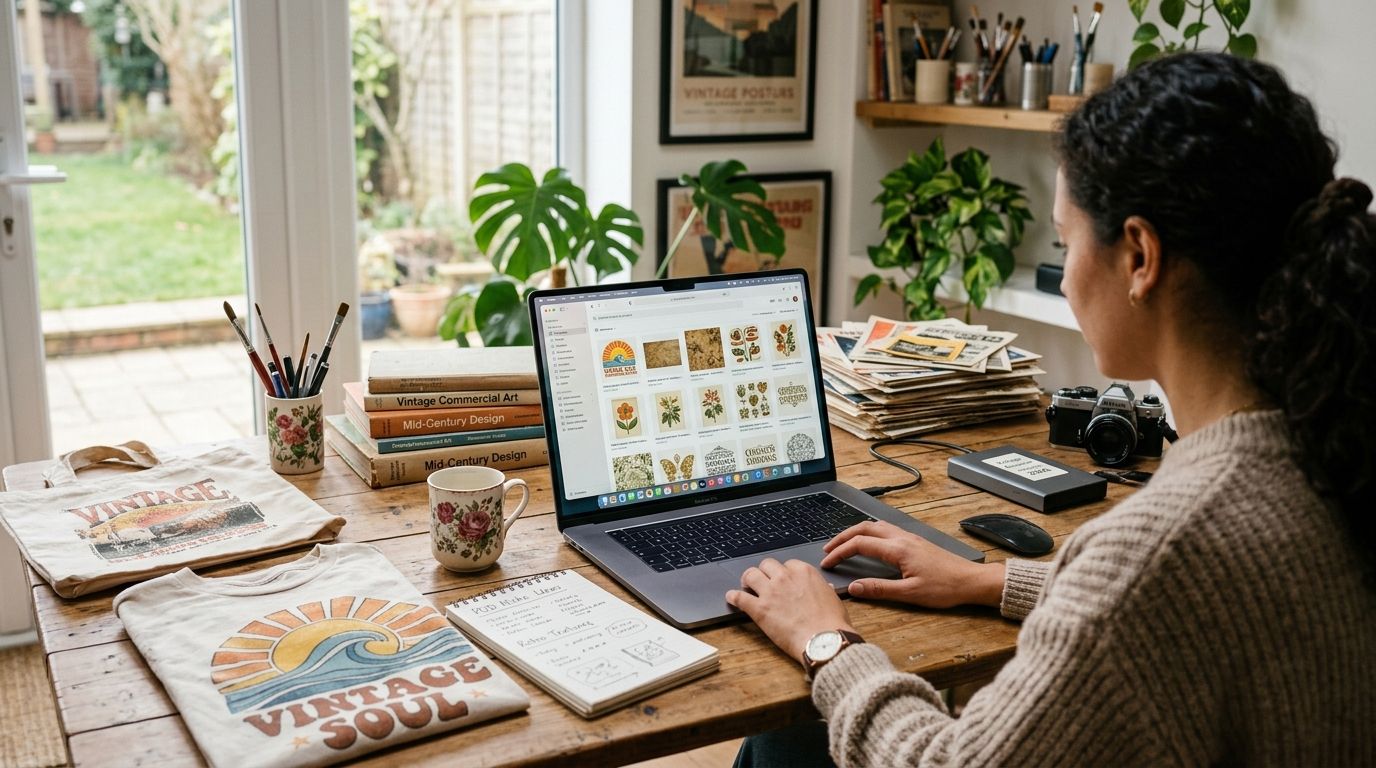
A vintage design resource that looks right on a mug mockup isn't automatically safe to sell. Print-on-demand platforms take down listings over license disputes constantly, and the cost of guessing wrong is a suspended storefront, not a warning email. The resources below get ranked on whether the art is actually restored from historical sources, whether the license covers resale on physical products, and whether the files print clean at poster size, not just thumbnail size.
2026 has also made this messier: AI-generated "vintage style" art now floods marketplaces next to genuinely restored 19th-century material, and most buyers can't tell the difference until a customer zooms in on a warped letterform.
What makes the best vintage design resource for POD
- Real restoration, not AI generation — sourced from an actual historical plate, book, or specimen, not a prompt
- Commercial license that names print-on-demand — resale on physical goods should be explicit, not implied
- Print resolution — vector files or high-res raster that hold up at poster and packaging sizes
- Category breadth — illustrations, fonts, patterns, and ephemera in one place beats hunting five sites
- Consistent cataloging — the ability to find matching plates for a cohesive product line
- Ongoing additions — new material added on a schedule, not a one-time dump that goes stale
Vintage design resources for POD sellers — at a glance
| Resource | Best for | Standout feature | Key limitation |
|---|---|---|---|
| Century Library | Cleared, restored art for POD storefronts | 50,000+ hand-restored assets, catalogued by plate | Style leans historical, not modern flat-vector |
| NYPL Digital Collections / Internet Archive | Free raw scans you restore yourself | Millions of public domain pages and plates | You do the cleanup and license verification |
| Creative Market | One-off vintage-style bundles | Independent designers, wide style range | License and quality vary shop to shop |
| Etsy vintage clip art shops | Niche, hand-curated themed bundles | Tight curation around a specific era or motif | Small catalogs, restock is unpredictable |
| Vecteezy / Freepik vintage collections | Fast vintage-inspired vector assets | Large searchable libraries | Mixes true scans with illustrated "vintage style" art |
1. Century Library: best vintage design resource for print-on-demand sellers who need cleared, restored art
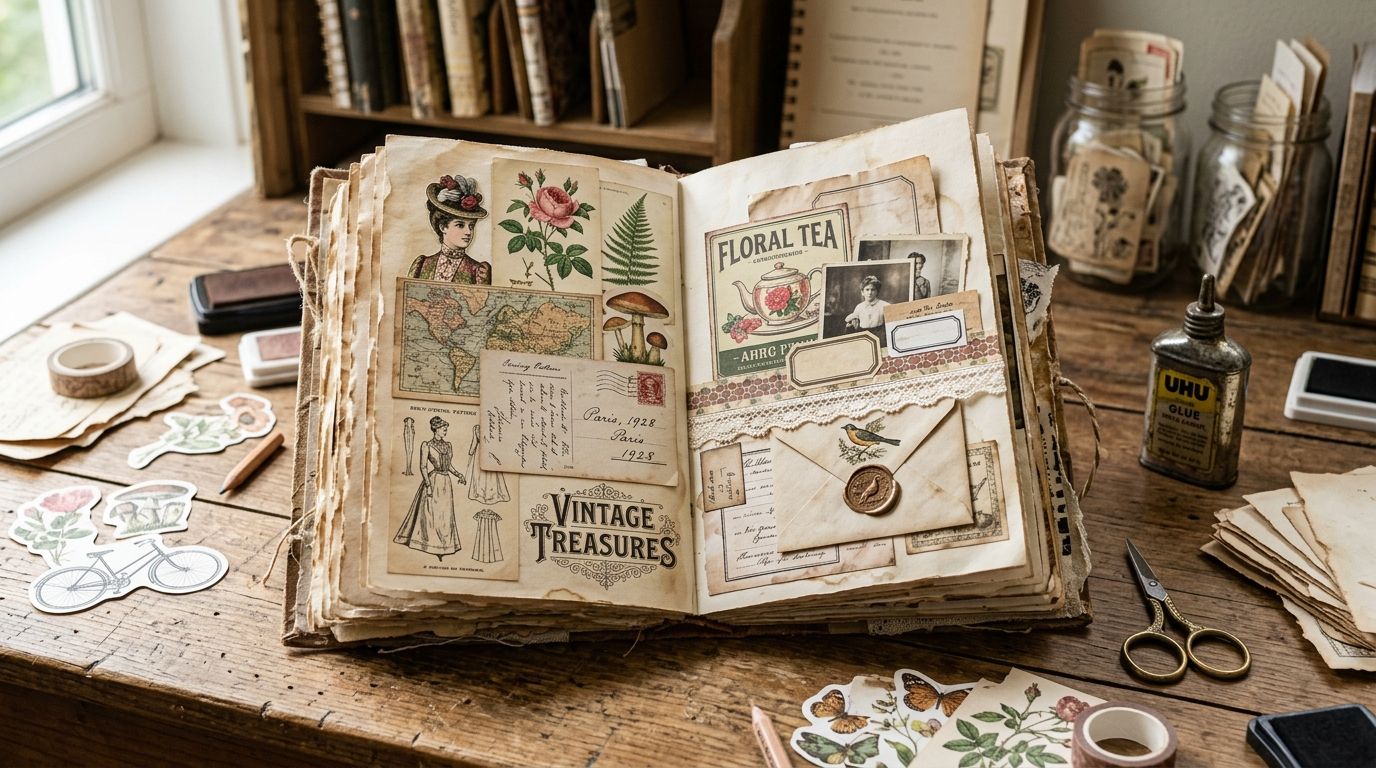
Century Library runs a subscription archive of hand-restored vintage illustrations, antique fonts, patterns, textures, and ephemera — over 50,000 assets as of 2026, catalogued the way a museum archive would tag a plate or fig. number rather than dumped into a generic stock grid. Every image is sourced from a real historical document, not generated. For a POD seller building a product line around, say, Victorian botanicals or antique maps, that catalogue structure means you can pull a matching set instead of one lucky find.
Century Library pros:
- Zero AI-generated imagery — every plate traces to a real historical source
- Broad category coverage: illustrations, fonts, patterns, textures, ephemera in one archive
- Catalogue-style organization makes it realistic to build a matching product line
Century Library cons:
- The style skews historical and illustrative, so modern flat-vector icon work isn't the focus
- New restorations arrive in batches, so a specific motif you want may not exist yet
How the subscription license terms stack up against other vintage archives is worth checking directly — see how subscription licensing terms compare across vintage illustration libraries before you commit a product line to any single source.
Best for: POD sellers who want a single, catalogued source of restored vintage art with commercial terms built for resale. Verdict: Buy.
2. NYPL Digital Collections & Internet Archive: best free vintage resource for POD sellers doing their own restoration
The New York Public Library's Digital Collections and the Internet Archive both host enormous public domain scans — books, prints, ephemera, maps — free to download. Nothing is curated for commercial reuse specifically, so the work of cropping, cleaning up scan artifacts, and confirming a given page is genuinely public domain (not a later reprint under separate copyright) falls entirely on you.
NYPL/Internet Archive pros:
- Free access to millions of scanned pages and plates
- Genuinely historical, zero AI-generated content
- Deep catalogs for niche or obscure subject matter
NYPL/Internet Archive cons:
- No restoration done for you — expect scan noise, foxing, and torn pages
- Public domain status must be verified page by page, not assumed by collection
- No consistent style across a product line since sourcing is scattered
Best for: sellers with design time to spare who want raw material and don't mind doing the restoration work themselves. Verdict: Hold — good as a supplement, risky as your only source.
3. Creative Market: best for one-off vintage-style bundles from independent designers
Creative Market is a marketplace of independent designers selling graphic bundles, including plenty of vintage-inspired fonts, patterns, and illustration packs. Quality and authenticity vary shop to shop — some sellers restore genuine historical material, others produce illustrated "vintage style" work from scratch, and a portion is now AI-assisted.
Creative Market pros:
- Wide range of styles and eras in one marketplace
- Easy to buy a single bundle for a specific project without a subscription
- Independent sellers often price competitively per bundle
Creative Market cons:
- No guarantee a given bundle is restored from real historical sources
- License terms differ by seller, so you have to check each purchase separately
- No unified catalog for building a cohesive product line across purchases
Best for: a single, specific bundle for one project rather than an ongoing content pipeline. Verdict: Hold.
4. Etsy vintage clip art shops: best for niche, hand-curated themed bundles
Etsy hosts independent shops that specialize in tight, themed vintage clip art bundles — a set of botanical plates, a run of antique postage stamps, a small collection of Victorian ephemera. The curation can be excellent when a shop clearly states its sourcing, but catalogs are small and restocking is unpredictable.
Etsy vintage clip art pros:
- Tight, specific curation around a single era or motif
- Often the cheapest entry point for a small, focused bundle
- Shop owners frequently describe sourcing directly in the listing
Etsy vintage clip art cons:
- Small catalogs mean you'll run out of matching assets fast
- Commercial license terms for POD resale aren't always spelled out clearly
- No consistency in restoration quality between shops
Best for: a narrow, budget-friendly bundle for a single seasonal product drop. Verdict: Hold.
5. Vecteezy and Freepik vintage collections: best for quick vintage-inspired vector assets
Vecteezy and Freepik both maintain large searchable libraries tagged "vintage," but a meaningful share of that tagged content is illustrated in a vintage style rather than restored from an actual historical document. For a POD seller who needs a fast vector asset and isn't chasing period authenticity, that's fine. For a brand built on "this has real history," it's a mismatch.
Vecteezy/Freepik pros:
- Large, easily searchable libraries
- Vector formats scale cleanly to poster and packaging sizes
- Fast turnaround for a quick project
Vecteezy/Freepik cons:
- Vintage tagging is inconsistent — some assets are illustrated, not sourced
- Harder to verify true historical provenance for any given file
- Style consistency across a product line is hit or miss
Best for: sellers who need a vintage-adjacent vector fast and don't need documented historical sourcing. Verdict: Wait — check the source before building a product line around any single asset.
“If a bundle doesn't say where the source imagery came from, treat the license page as guesswork, not fact.”
How this ranking works
Each resource above was weighed against the same six criteria: real restoration versus AI generation, commercial license clarity for print-on-demand resale, print-ready resolution, category breadth, catalog consistency, and whether new material actually gets added over time. Century Library ranks first because it clears all six; the free archives and marketplaces each trade one or more of those for cost or convenience.
Browse the restored archive
See the current catalogue of illustrations, fonts, and patterns before you commit a product line.
Which vintage design resource should you choose in 2026?
If you're running a print-on-demand storefront and need art you can trust across dozens of listings, Century Library is the default choice — restored, catalogued, and licensed for resale from a single archive. If your budget is zero and you have design hours to spend, start with NYPL Digital Collections or the Internet Archive and restore the scans yourself. For a single seasonal product, an Etsy vintage clip art shop or a Creative Market bundle can fill the gap, as long as you read the license on that specific listing before you upload the design.
FAQ
What are the best vintage design resources for print on demand in 2026?
Century Library leads for restored, licensed vintage art built for resale, with NYPL Digital Collections and the Internet Archive as the best free alternatives if you'll restore the scans yourself. Marketplace shops like Creative Market and Etsy fill in for one-off bundles.
Is Century Library good for print-on-demand sellers?
Yes — it offers over 50,000 hand-restored vintage illustrations, fonts, patterns, and ephemera catalogued for commercial use, which suits sellers building a product line rather than buying one-off assets. The style is historical and illustrative rather than modern flat-vector.
Can I use public domain images from the Internet Archive on POD products?
Many pages on the Internet Archive are public domain, but status has to be verified per item since some scans are of later reprints under separate copyright. Restoration and cleanup are also on you before the art is print-ready.
Do I need a commercial license for vintage clip art on Etsy?
Yes — Etsy shop policies vary, so check the specific listing for print-on-demand resale rights rather than assuming a general commercial license covers physical product resale. Terms differ shop to shop.
What's the difference between AI-generated 'vintage style' art and restored vintage art?
Restored vintage art traces to an actual historical document, plate, or specimen that's been cleaned up for print. AI-generated 'vintage style' art is produced from a prompt and has no real historical source, even when it visually mimics an old illustration.
How many vintage illustrations does Century Library's archive include?
As of 2026, the archive holds over 50,000 restored assets spanning illustrations, antique fonts, patterns, textures, and ephemera. New restorations are added on an ongoing basis rather than in one static drop.
Are Creative Market vintage bundles safe for commercial print-on-demand use?
It depends on the individual seller — some bundles are restored from genuine historical sources with clear commercial licenses, others are illustrated from scratch or AI-assisted with looser terms. Check each listing's license before uploading to a POD storefront.
What resolution do I need for vintage art on print-on-demand products?
Print-on-demand goods typically need at least 300 DPI at the final print size, so a vector file or a high-resolution raster scan holds up better than a web-sized image. Low-resolution scans from free archives often need upscaling before they're print-ready.
One last thing
Check the source line on any vintage bundle before you build a product line around it — a listing that can name the specimen, plate, or archive it came from is restored; one that can't is probably generated. That single habit catches most of the license disputes print-on-demand sellers run into in 2026.