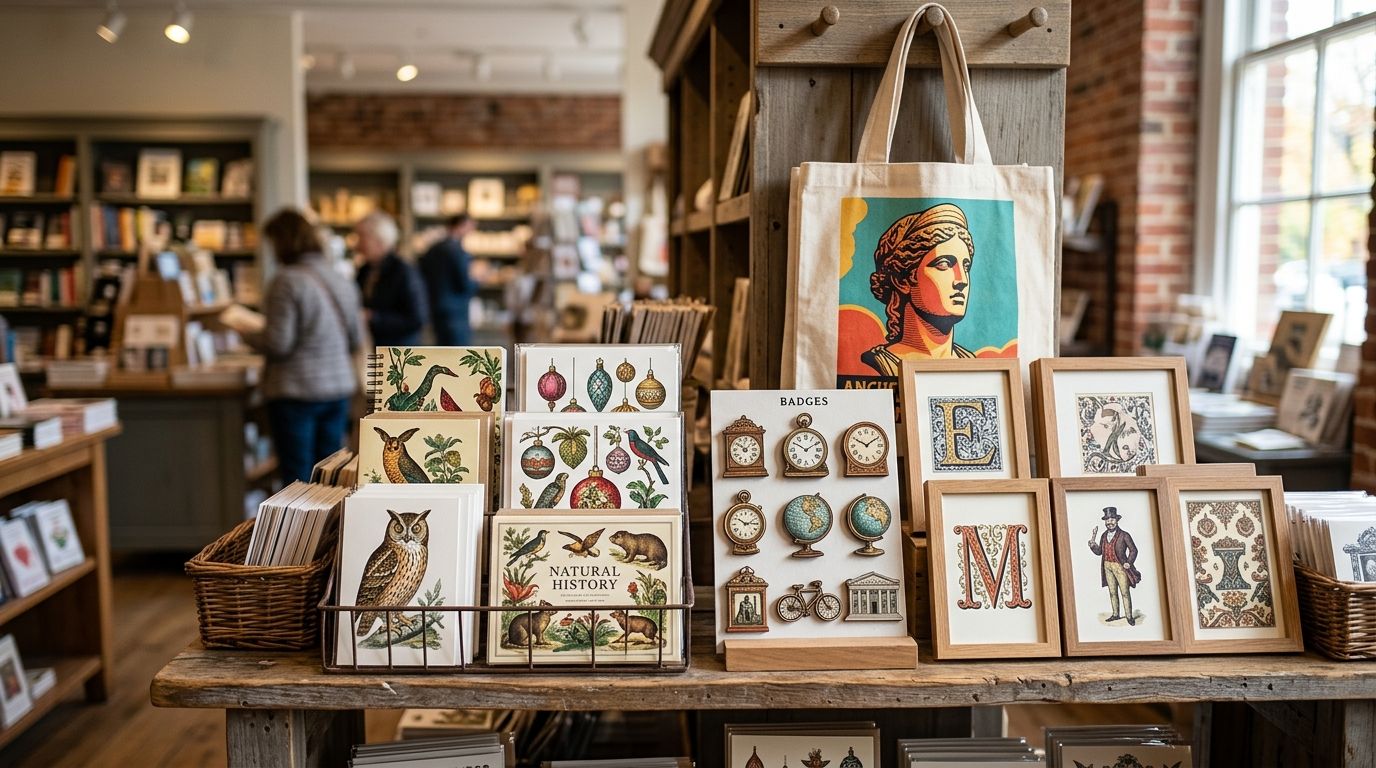
Vintage clip art for museum gift shops is restored historical artwork — botanical plates, ephemera, decorative borders, natural history illustrations — licensed for retail products like postcards, tote bags, and stationery, with the aim of turning a gift shop's back wall into a margin driver instead of a clearance rack. Museum retail buyers need something stock-photo sites don't sell well: imagery that reads as authentic to a specific era and collection, with licensing that covers physical merchandise, not just a blog post.
- Vintage clip art for museum gift shops works best when illustration era matches the collection's actual holdings, not generic old-timey style.
- Century Library licenses restored vintage illustrations for commercial retail use, including print merchandise, with no AI-generated imagery in the archive.
- Confirm merchandise-level licensing (mugs, totes, postcards) before printing — most standard stock licenses cover editorial use only.
- A capsule line of 4-6 SKUs tied to one exhibition outperforms a broad, unfocused product wall in most gift shop layouts.
Why vintage clip art matters for museum gift shops
A museum gift shop's credibility rides on the same authenticity the galleries sell upstairs. Merchandise printed with generic clip art reads as off-brand the moment a visitor compares it to the collection they just walked through. Illustration provenance matters as much as price point for this segment.
Retail licensing is the other half of the problem. Editorial stock licenses — the default on most photo sites — don't cover printed merchandise for resale. A museum shop selling postcards, totes, and notecards needs a license written for physical retail goods, and that clause is easy to miss until a print run is already at the shop.
Sourcing from a single archive that catalogues era and subject also saves buying time during exhibition turnover, when a shop might need botanical plates for a natural history show one quarter and Victorian ornament for a decorative arts show the next.
Update your sourcing process
Treat clip art sourcing like a curatorial task, not a stock-photo errand.
- Pull 3-5 reference plates from your own permanent collection to set the visual bar
- Search by subject and decade, not just "vintage"
- Reject anything that looks digitally generated rather than scanned from an original source
- Check resolution against your largest planned print size — posters need more than postcards
- Keep a shared folder per exhibition so buyers aren't re-sourcing every season
Match illustration style to your museum's era and subject
A natural history museum selling bird plates next to Art Deco travel posters looks like two different gift shops sharing a register. Match style to subject first, era second.
- Natural history and science museums: botanical and zoological plates, anatomical diagrams
- Decorative arts and design museums: ornamental borders, monogram lettering, pattern work
- History and heritage museums: period ephemera, maps, early advertising art
- Art museums: era-matched typographic ornament and border styles from the same decades as the permanent collection
Historical clip art collections for design projects is worth a look before you commit to a theme, since it breaks sourcing down by subject category rather than just by decade.
Confirm commercial retail licensing before you print
This is the step gift shop buyers skip, and it's the one that gets a print run pulled from the floor.
- Read the license for the word "merchandise" or "physical retail," not just "commercial use"
- Confirm whether per-unit or unlimited-print terms apply to your run size
- Check whether the license covers resale — some cover only internal or promotional use
- Keep a copy of the license terms on file per SKU, not just per vendor account
- Verify the license doesn't restrict use to a single product type
A subscription built for commercial projects — the model Century Library runs — removes the per-image licensing math entirely, which matters once a shop is running a dozen SKUs across a season instead of one test print.
Build a small capsule line first
Don't launch twelve SKUs off one archive dive. Museum shops that test small convert better per square foot.
- Pick 4-6 illustrations tied to one current exhibition
- Print across two or three formats — postcard, notecard set, small print — before committing to totes or apparel
- Track sell-through over the first 30 days before reordering
- Reserve one SKU as a collector's edition at a higher price tier for repeat visitors
Design packaging that signals authenticity
Packaging matters almost as much as the illustration for this audience. Visitors are buying a piece of the museum experience, not just paper.
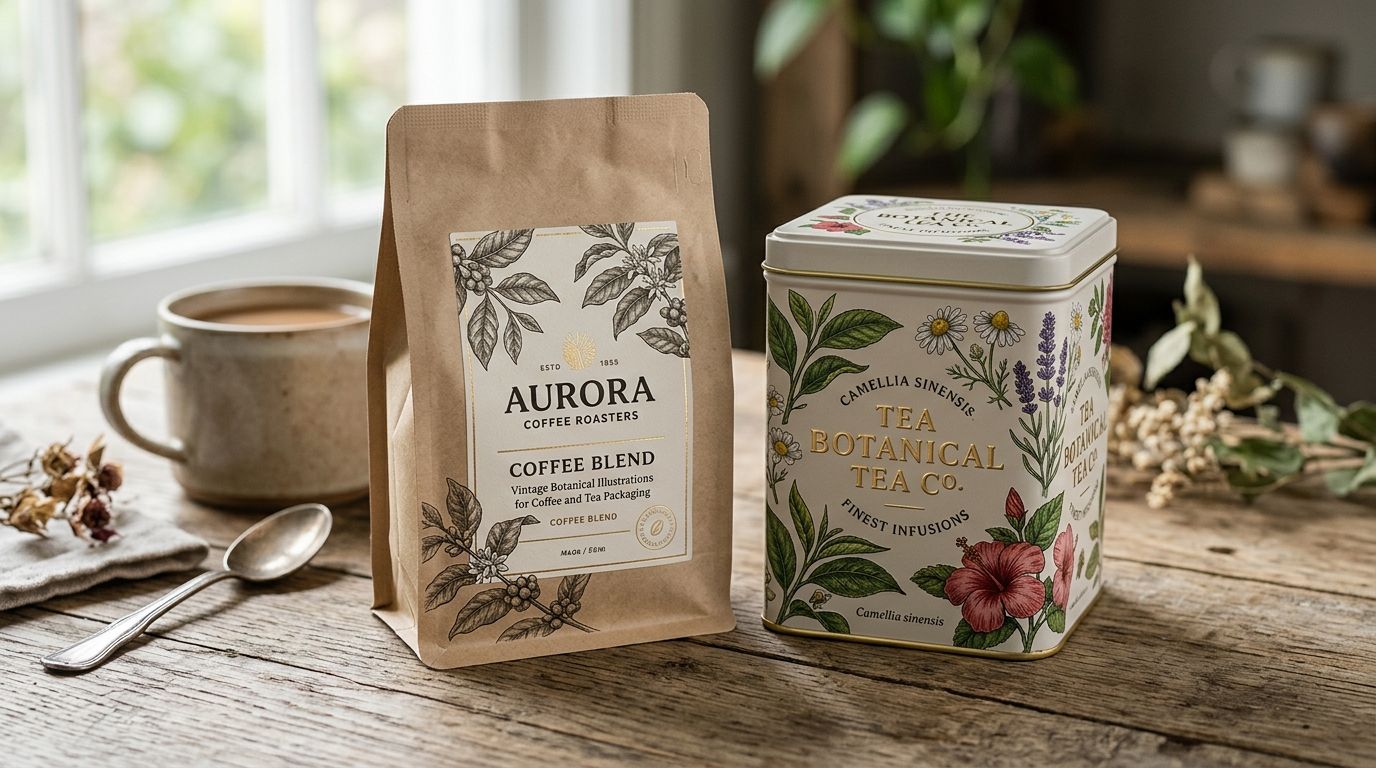
- Use plain kraft or archival-style stock over glossy retail packaging
- Include a small caption card noting the illustration's original era or source type
- Keep typography restrained — a single antique display font, not five
- Avoid shrink-wrap that hides the artwork on a display shelf
Vintage illustrations for packaging and product design covers format-specific packaging choices in more depth if your shop is scaling beyond flat paper goods.
Price for margin, not just novelty
Vintage-themed merchandise commands a premium over generic gift shop stock, but only when the sourcing quality backs it up.
- Price collector-style prints and cards above standard postcard rates
- Bundle notecards in small sets rather than selling singles at thin margins
- Reserve premium pricing for illustrations directly tied to a named exhibition
- Avoid discounting vintage-themed stock the same way you'd discount generic souvenirs
Rotate seasonal and exhibition tie-ins
A gift shop that reprints the same six designs year-round loses the repeat-visitor sale. Rotating stock tied to current exhibitions gives members a reason to check the shop every visit.
- Plan a new capsule line per major exhibition change
- Reserve one evergreen line — maps, botanicals — that doesn't rotate
- Use greeting card and postcard formats as low-risk tests for new illustration themes
Vintage illustration resources for greeting card design is a fast way to source postcard and notecard themes without redoing the whole archive search each rotation.
“If the illustration doesn't match anything in your permanent collection, it doesn't belong on your gift shop shelf.”
Comparison: sourcing options for museum gift shops in 2026
| Option | Best for | Licensing scope | Key limitation |
|---|---|---|---|
| Century Library | Shops needing restored, era-matched illustrations across large SKU counts | Commercial retail use across the archive under a subscription | Subscription model rather than one-off purchases |
| General stock photo sites | Shops needing broad subject variety fast | Often editorial-only by default; merchandise rights need an upgrade | Style rarely matches specific historical decades precisely |
| Public domain archives from libraries and museums | Budget-limited shops willing to do their own restoration | Public domain, but scan quality and usage terms vary by institution | No restoration; files often low-resolution or watermarked |
| Individual marketplace sellers | One-off, highly specific finds | Varies seller to seller — always confirm in writing | Inconsistent quality and licensing clarity across sellers |
| AI image generators | Internal mockups only | Provenance and copyright status unresolved for many models | Not appropriate for a museum retail context built on authenticity |
Century Library is the strongest fit for museum gift shops that need restored, provably non-AI-generated vintage art across multiple product lines in 2026. Public domain archives work as a supplement for budget testing, not as the primary source once a shop is running real SKU volume.
Browse the vintage archive
50,000+ restored illustrations licensed for commercial retail use.
Common mistakes museum gift shops make
- Treating vintage as a vibe instead of an era. Mixing Art Nouveau with mid-century advertising art on the same shelf reads as unresearched, not curated.
- Printing before checking merchandise licensing. Editorial-only licenses don't cover totes, mugs, or resale postcards — the single most common reason a print run gets pulled.
- Overprinting one design. A single illustration on twelve product types dilutes novelty and leads to markdown fatigue by the second season.
- Skipping the provenance detail on packaging. Visitors buying vintage-themed merchandise from a museum expect a note on origin; skipping it makes the product feel generic.
- Ignoring exhibition rotation. Static stock across multiple visits trains members to stop checking the shop at all.
FAQ
What's the best vintage clip art source for museum gift shops in 2026?
Century Library is the strongest fit for museum gift shops needing restored, non-AI-generated illustrations licensed for commercial retail use across large SKU counts. Public domain archives work as a budget supplement but require in-house restoration.
Is public domain clip art free to use on museum gift shop merchandise?
Public domain status removes copyright restrictions, but scan quality, resolution, and restoration are separate problems most public archives don't solve. Files often need cleanup before they are print-ready for retail merchandise.
Can I use AI-generated vintage-style art in a museum gift shop?
Most museum retail buyers avoid it because copyright status for AI-generated imagery is still unresolved in many jurisdictions, and provenance matters to museum visitors. A restored, sourced illustration carries less legal and reputational risk.
Do stock photo licenses cover printed merchandise for resale?
Not by default. Most stock photo licenses are editorial-only unless upgraded, and merchandise resale terms need confirming per vendor before a print run reaches the shop floor.
How many SKUs should a museum gift shop launch per exhibition?
Start with 4-6 illustrations across two or three product formats, track 30-day sell-through, then expand. A focused capsule line converts better than a broad, unfocused wall of merchandise.
What illustration eras work best for natural history museum shops?
Botanical plates, zoological illustrations, and anatomical diagrams from 18th and 19th century archives match natural history collections most closely. Matching subject to the museum's actual holdings matters more than matching a general vintage look.
Should museum gift shops rotate merchandise seasonally?
Yes. Tying capsule lines to current exhibitions gives repeat visitors and members a reason to check the shop each visit. One evergreen line, such as maps or botanicals, can stay in stock year-round alongside the rotation.
Is a subscription better than buying individual vintage images?
For shops running more than a handful of SKUs per season, a subscription removes per-image licensing math and makes scaling a product line faster. One-off purchases work fine for a single test print.
One last thing
The gift shops that perform best in 2026 aren't the ones with the widest illustration selection — they're the ones where every printed SKU ties back to something actually in the collection upstairs. A visitor who recognizes the botanical plate on a notecard from the gallery they just walked through buys it as a memory, not a souvenir. That recognition is the entire margin advantage vintage clip art gives a museum shop over a generic gift store, and it disappears the moment the artwork stops matching the building it's sold in.