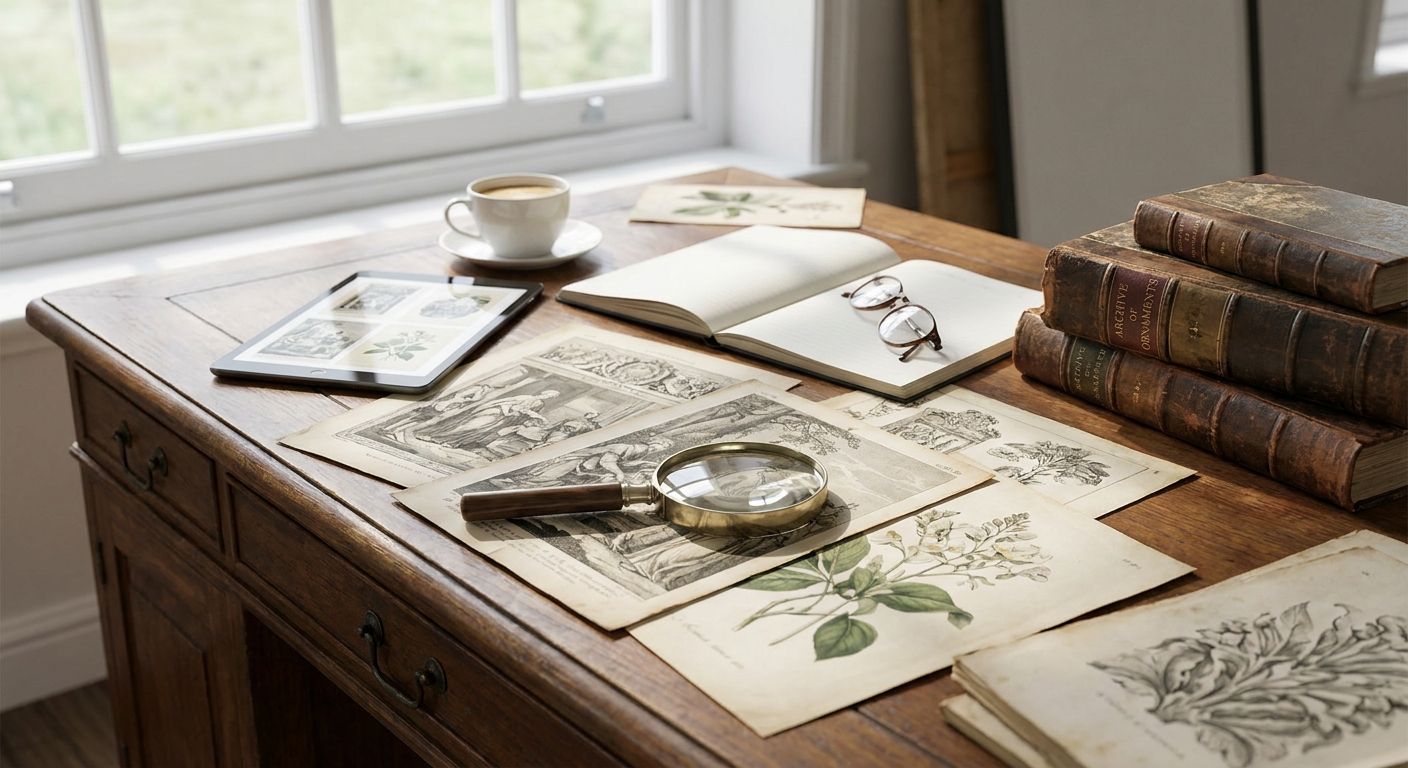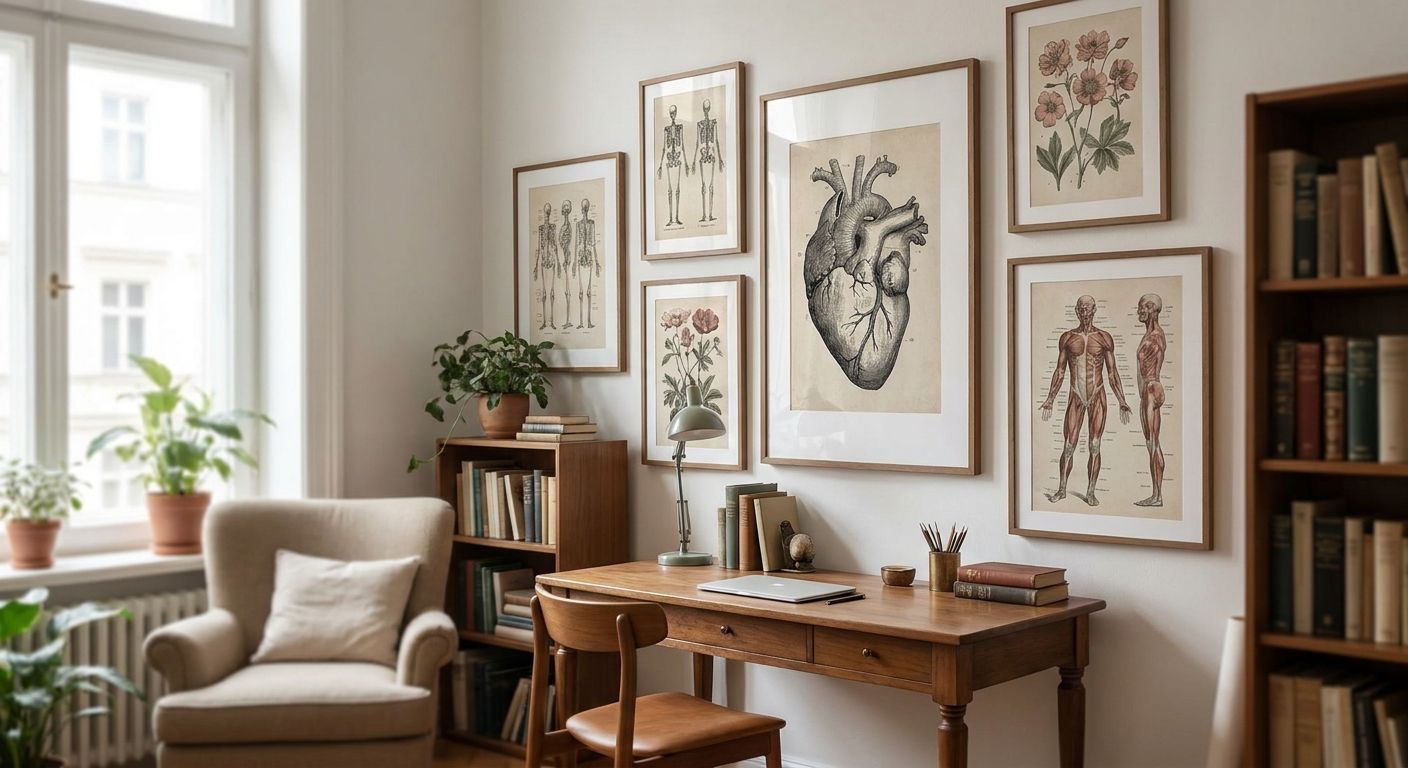
Anatomical illustrations for wall art work when the source imagery has real texture and history behind it — a flat clip-art skeleton reads as decor filler, a hand-restored 19th-century engraving reads as a collection piece. This guide ranks the anatomical illustration categories inside the Century Library archive by the room and use case they actually suit in 2026, so you're not scrolling 50,000+ plates trying to guess which one holds up framed at 18x24.
- Anatomical heart and circulatory plates are the best overall anatomical illustrations for wall art in 2026 — verdict: Buy.
- Skeletal system studies fit dark academia and gallery-wall builds; phrenology charts suit apothecary and curiosity-cabinet spaces.
- Écorché muscle studies belong in art studios and life-drawing rooms, not general living spaces — verdict: Buy for that use only.
- Every plate in the Century Library archive is hand-restored from 18th- and 19th-century medical texts, with zero AI-generated imagery.
Why this matters
Most "vintage anatomy print" results online are AI upscales of low-res scans, or stock illustrations dressed up to look old. They print soft, the linework smears past 11x14, and the commercial licensing is usually undocumented or absent entirely.
The Century Library archive sources anatomical plates from actual 18th- and 19th-century medical atlases and anatomy textbooks, restores them by hand, and clears them for commercial use — branding, packaging, stationery, wall art reproduction. That distinction matters more in 2026 than it did five years ago, because AI-generated "vintage style" imagery is now flooding search results and most of it can't be traced to a real historical source.
What makes the best anatomical illustrations for wall art
- Restoration quality — hand-cleaned scans with corrected contrast and repaired foxing, not AI upscales
- Historical sourcing — genuine 18th- and 19th-century anatomy atlases and medical texts, not modern reproductions styled to look old
- Print resolution — detail that survives enlargement to 18x24 or bigger without softening
- Style range — engravings, lithographs, and hand-tinted plates, so you're not stuck with one visual register
- Commercial licensing clarity — cleared for use in branding, packaging, and stationery projects, not just personal decor
- Aspect ratio fit — proportions that work in standard frame sizes without heavy cropping
Anatomical illustration categories at a glance
| Category | Best for | Standout feature | Key limitation |
|---|---|---|---|
| Heart & circulatory plates | Clinical or medical office decor | Bold linework reads clearly at a distance | Subject matter can feel clinical outside a medical setting |
| Skeletal system studies | Dark academia gallery walls | High detail holds up at large print sizes | Repetitive if you hang more than two or three together |
| Phrenology & cranial charts | Apothecary and curiosity-cabinet interiors | Dense annotation text adds visual interest | Text-heavy plates lose legibility at small sizes |
| Écorché muscle studies | Art studios and life-drawing rooms | Sculptural detail suits reference and teaching walls | Too intense for living rooms or client-facing spaces |
| Eye, ear & sensory organ diagrams | Minimalist eclectic bathroom or hallway galleries | Small-format plates work well in tight groupings | Limited standalone impact at large sizes |
| Botanical-anatomical hybrid plates | Wellness and spa-adjacent spaces | Softer palette than pure medical plates | Smaller selection than core anatomy categories |
1. Heart & circulatory plates: best anatomical illustrations for clinical and office wall art
These are cross-section and full-organ studies of the heart and vascular system, originally drawn for 19th-century medical training. The linework is bold enough to read from across a waiting room, and the restoration keeps the original engraving crisp rather than muddy.
Heart & circulatory plate pros:
- Reads clearly at large sizes — good for a clinic, wellness office, or design studio reception wall
- Strong single-piece impact, no need to hang a grouping
- Works in both black-and-white engraving and hand-tinted versions
Heart & circulatory plate cons:
- Subject matter skews clinical — not the right pick for a nursery or a soft, casual living room
- Limited color variation if you're building a palette-matched gallery wall
Best for: medical offices, clinics, and design studios wanting a single statement piece.
Verdict: Buy — the strongest overall pick for anatomical illustrations for wall art in 2026.
2. Skeletal system studies: best for dark academia gallery walls
Osteology plates — full skeletons, joint studies, cranial structure diagrams — pulled from 19th-century anatomy atlases. These carry the density and shading that dark academia interiors lean on: heavy linework, aged paper tone, academic annotation.
Skeletal system study pros:
- High detail survives enlargement past 24 inches
- Pairs naturally with antique botanical or map prints for a layered gallery wall
- Wide range of individual bone and joint studies, not just full-skeleton plates
Skeletal system study cons:
- Hanging more than two or three together starts to feel repetitive rather than curated
- Not a fit for bright, minimalist rooms — the density fights a clean palette
Best for: dark academia bedrooms, home libraries, and layered gallery-wall builds.
Verdict: Buy for anyone building a dense, academic gallery wall.
3. Phrenology & cranial charts: best for apothecary and curiosity-cabinet interiors
Phrenology charts were originally teaching aids for a since-debunked pseudo-science, but the plates themselves — annotated skulls divided into labeled regions — have become a staple of apothecary and cabinet-of-curiosities interior styling. The dense text and diagram work adds texture that a plain illustration can't.
Phrenology & cranial chart pros:
- Annotation-heavy design adds visual interest beyond the illustration itself
- Strong fit for apothecary shelving, bar carts, and curio-style groupings
- Distinct from standard anatomy plates — less likely to feel generic
Phrenology & cranial chart cons:
- Small annotation text loses legibility below roughly 11x14
- The pseudo-scientific subject matter isn't a fit for medical or clinical spaces
Best for: apothecary shelves, curio cabinets, and eclectic vintage interiors.
Verdict: Buy for curiosity-cabinet styling; Skip for clinical or minimalist rooms.
4. Écorché muscle studies: best for art studios and life-drawing rooms
Écorché plates — figures with skin removed to show muscle structure — were standard reference material for painters and sculptors long before photography. These belong in working art spaces more than living rooms.
Écorché muscle study pros:
- Genuine reference value for figure drawing and sculpture practice
- Sculptural detail holds up as large-format wall art in a studio
- Distinct visual register from standard skeletal or organ plates
Écorché muscle study cons:
- Intensity of subject matter is a hard pass for client-facing rooms or family spaces
- Narrower audience than heart or skeletal plates
Best for: art studios, ateliers, and life-drawing classrooms.
Verdict: Buy for studio and teaching spaces only; Skip for general home decor.
5. Eye, ear & sensory organ diagrams: best for small-format gallery groupings
These are smaller cross-section studies — eye anatomy, inner ear structure, olfactory diagrams — originally printed as figure plates in medical texts rather than standalone illustrations. Their compact scale makes them better suited to groupings than solo statement pieces.
Sensory organ diagram pros:
- Small format works well in tight hallway or bathroom groupings
- Variety of subjects (eye, ear, nose) lets you build a themed set without repetition
- Lower visual weight than full-skeleton or muscle plates
Sensory organ diagram cons:
- Little standalone impact if printed large
- Selection is narrower than the core anatomy categories
Best for: minimalist eclectic hallway or bathroom gallery walls.
Verdict: Buy as part of a grouped set; Hold if you need one large statement piece.
6. Botanical-anatomical hybrid plates: best for wellness and spa-adjacent spaces
Herbarium-style plates that pair plant anatomy with human anatomy — root systems next to circulatory studies, leaf structure next to skin cross-sections. These sit closer to the vintage botanical illustrations side of the archive than to core medical plates, with a softer palette that suits wellness spaces better than clinical ones.
Botanical-anatomical hybrid pros:
- Softer, warmer palette than pure medical engravings
- Fits wellness studios, spas, and calm bedroom settings
- Bridges two archive categories — botanical and anatomical — for a distinct look
Botanical-anatomical hybrid cons:
- Smaller selection than core heart, skeletal, or muscle categories
- Less "scientific" impact if you want a strictly medical aesthetic
Best for: wellness studios, spas, and calm bedroom interiors.
Verdict: Buy for a softer wellness aesthetic.
How we ranked these
Each category was weighed against the six criteria above — restoration quality, historical sourcing, print resolution, style range, licensing clarity, and aspect ratio fit. Heart and circulatory plates rank first because they score highest on standalone impact and print resolution at large sizes; the categories further down the list win on fit for a narrower room type rather than losing on quality.
Browse the anatomical archive
Hand-restored plates cleared for commercial and print use.
Which anatomical illustrations should you choose?
For a single statement piece in an office, clinic, or design studio, heart and circulatory plates win in 2026 — bold linework, strong at large sizes, works framed alone. Building a dense gallery wall calls for skeletal system studies paired with two or three complementary categories. Softer, calmer spaces do better with botanical-anatomical hybrid plates than with core medical engravings. If you're undecided, start with one heart or skeletal plate at 18x24 and build outward from there.
FAQ
What's the best anatomical illustration style for wall art in 2026?
Heart and circulatory plates are the strongest overall pick for anatomical illustrations for wall art in 2026 because the linework holds up as a single large-format piece. Skeletal studies work better if you're building a multi-piece gallery wall.
Are anatomical wall art prints appropriate outside medical spaces?
Yes — categories like phrenology charts, botanical-anatomical hybrids, and skeletal studies are common in dark academia, apothecary, and wellness interiors specifically because the subject matter reads as historical rather than clinical. Heart and circulatory plates lean more clinical and suit offices better than living rooms.
Is vintage anatomical art better than AI-generated vintage-style prints?
Vintage anatomical art sourced from real 18th- and 19th-century medical texts holds up better under scrutiny and at large print sizes than AI-generated approximations. The Century Library archive is hand-restored with zero AI-generated imagery, which is the main differentiator versus most search results in 2026.
How large can anatomical illustration plates print before quality drops?
Hand-restored plates from the Century Library archive hold detail past 18x24 without softening, because the restoration process works from high-resolution scans of the original engravings. Lower-quality scans or AI upscales typically start showing artifacts well before that size.
Can anatomical illustrations be used commercially, not just for personal decor?
The Century Library archive clears its anatomical plates for commercial use in branding, packaging, and stationery projects, not just personal wall art. That's a meaningful difference from most stock or AI-generated anatomical imagery, which often has undocumented licensing.
What's the difference between écorché studies and skeletal plates?
Écorché plates show muscle structure with skin removed and were originally used as reference material for painters and sculptors, while skeletal plates show bone structure and joints. Écorché studies suit art studios and life-drawing rooms; skeletal plates suit broader gallery-wall use.
Do phrenology charts still make sense as decor in 2026?
Phrenology itself was debunked as pseudo-science, but the charts remain popular as decor because of the dense annotation and diagram work rather than the underlying claims. They fit apothecary and curiosity-cabinet interiors better than clinical or minimalist spaces.
One last thing
Phrenology charts were built as teaching tools for a theory that's been fully discredited for over a century — and that's exactly why they read as "curiosity cabinet" decor now instead of medical decor: the annotation and diagram density does the visual work, not the science behind it. If you're choosing between two categories for the same wall, pick based on annotation density and linework weight, not subject matter alone — that's what actually determines whether the piece reads as a statement print or gets lost at a glance.